The DLS Flaw Exposed: Why the Mathematics of Cricket Unfairly Penalized India A in Dambulla
India A piled up a mammoth 349/9 in Dambulla, yet walked off second best due to a 4-run DLS rain defeat against Afghanistan A. Here is a deep dive into the mathematical flaws of the DLS method, why it severely over-weights early wickets, and how it completely ignores scoreboard pressure.

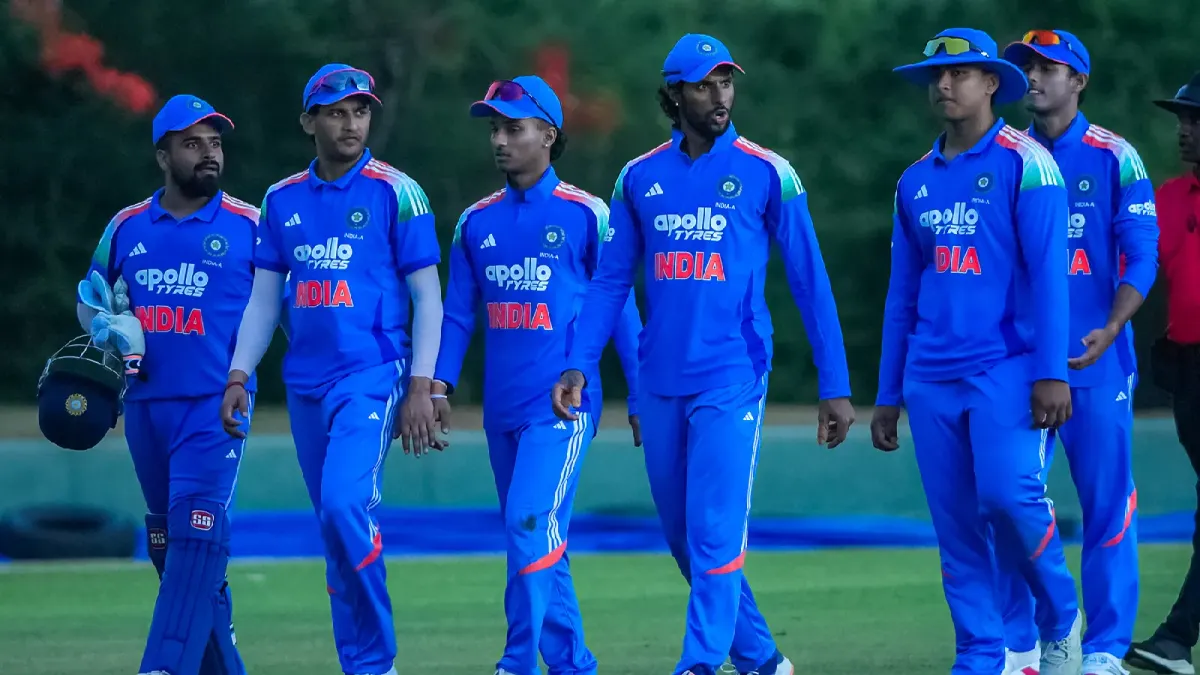
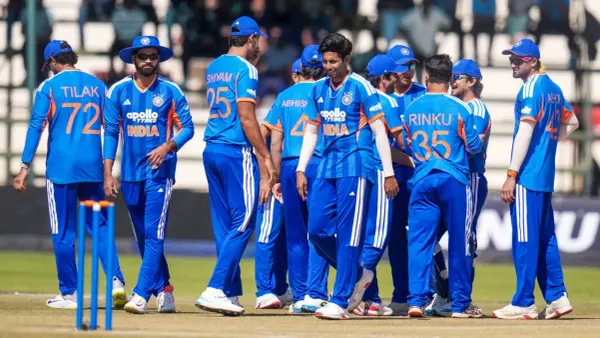
Cricket is a sport driven by complex metrics, but yesterday in Dambulla, a structural flaw in predictive mathematical modelling overrode a dominant on-field performance. India A constructed a massive 349 for 9 in their rain-curtailed 49 overs against Afghanistan A. Yet, when heavy rain stopped play permanently with Afghanistan A at 177 for 2 in 25.5 overs, the Duckworth-Lewis-Stern (DLS) calculation intervened—handing the chasing side a narrow 4-run victory.
For sports data analysts and tactical purists, this result was a bitter disappointment for Tilak Varma's men. It stands as a glaring case study on how standard predictive algorithms fail to account for real-world fatigue, environmental decay, and scoreboard pressure.
The Linear Illusion of "Wickets in Hand"
The underlying mathematical engine of the DLS method operates on a core asset variable: resources remaining. This metric dictates that a chasing team’s capacity to score is determined linearly by combining the number of overs left with the wickets lost.
In Thursday's fixture, Afghanistan A captain Imran Mir played an exceptionally smart, aggressive knock of 75* off 70 balls alongside senior batter Bahir Shah (51*). By attacking the hard ball early and intentionally preserving wickets—sitting at a comfortable 177 for 2—they stayed exactly three to four runs ahead of the rolling "par score" line.
However, the calculation falls victim to a major structural assumption. It assumes that because a team has 8 wickets remaining, their scoring trajectory will cleanly mirror their early momentum across the back half of a massive chase. In short, it treats a rapid 25-over baseline sprint as if it had the exact same resource valuation required to sustain a gruelling 350-run long-distance marathon.
The Missing Variable: Scoreboard Pressure & Fatigue Decay
What the current DLS framework completely ignores is the psychological and physical compounding of scoreboard pressure. Chasing a target of 350 runs creates an exponential risk curve as the overs tick down.
When a required run rate hovers past 9.5 runs an over for a sustained period, bowling teams shift their lengths, field placements drop to the boundary ropes, and individual player fatigue sets in. We saw the true reality of this pressure just two days ago, when Sri Lanka A collapsed completely in the death overs under a relentless Indian bowling squeeze.
By ending the match abruptly at 25.5 overs, the DLS system effectively rewarded Afghanistan A for a stellar Powerplay and early accumulation phase while completely absolving them of executing during the most high-risk phase of a premium run chase.
Close-in Catcher’s Take
Data models are only as effective as their capacity to replicate real-world dynamics. While the DLS system is an essential operational tool for handling rain-affected fixtures, its exponential over-weighting of top-order wicket preservation routinely penalises teams that register immense, comprehensive first-innings aggregates. Afghanistan A batted fearlessly, but the software gave them an exit ticket before they had to climb the steepest, most volatile part of the mountain. Until cricket's predictive algorithms fully integrate environmental and scoreboard decay metrics, the game will continue to experience these mathematical illusions.
Analyse Like a Pro, Play Like a Pro! Whether it’s decoding a flawed cricket algorithm or predicting a tactical press on the pitch, execution depends entirely on precision control. With the FIFA World Cup officially underway this week, there’s no better time to upgrade your game. Touch, drift, and trajectory all start with elite gear. Check out the top-rated Official Match-Spec Footballs and Training Gear on Amazon India and dominate the pitch today!