The Asymmetric Trap: Why India’s Belfast Defeat Proves the ICC Must Finally Standardize the Cricket Field
India's loss at Stormont exposed cricket's greatest structural joke: asymmetrical playing fields. From Belfast’s long square boundaries to Canterbury’s historic lime tree, here is why the ICC must finally enforce uniform oval sizes.

In any elite, multi-billion-dollar modern sport, the dimensions of the arena are sacred.
If you walk onto a football pitch in London, Munich, or Rio de Janeiro, you are stepping onto a standardised rectangle. The same applies to hockey, tennis, and basketball. The lines are drawn to exact, non-negotiable specifications to ensure that athletic execution—not geographical accident—decides the victor.
Yet, cricket continues to cling to a romantic, village-green anachronism.
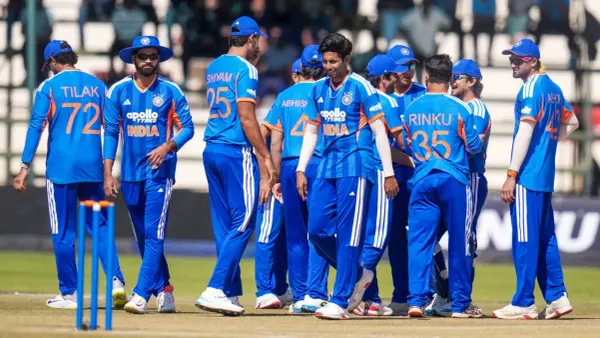
Yesterday’s historic disaster at the Stormont Cricket Ground in Belfast, where Ireland defeated India's star-studded batting lineup by 34 runs, was a direct consequence of this structural inconsistency. Indian batsmen, used to the consistent, modern ovals of the subcontinent, looked completely lost attempting to clear Belfast’s massive, deep-square boundaries on a sluggish pitch.
It is time to ask the hard question: Why does a sport of this scale still allow local convenience to shape its grounds?
The Unfair Advantage of Weird Ground Shapes
To understand how bizarre this situation is, imagine if a football field had a sudden, erratic curve on the left side that made the penalty box twice as small, while the right side stretched out into a massive corner.
In cricket, such an arrangement is everyday reality. The boundary line is a highly erratic curve.
At a ground like Eden Park in Auckland, straight boundaries can be as short as 55 metres, while the square boundaries stretch far wider. At Stormont in Belfast, the square boundaries are incredibly deep.
This dramatic variance in boundary length completely warps the tactical requirements of the game:
- A shot that is a massive six at one stadium becomes a simple catch to deep mid-wicket at another.
- Bowlers are forced to alter their lengths completely not because of the batsman’s skill, but because the boundary rope has been arbitrarily pulled in or pushed out by 20 metres on one side.
This isn’t "character" or "charm"—it is infrastructural amateurism.
From Canterbury Trees to Belfast Boundaries: A Brief History of Absurdity
For centuries, cricket has laughed off these anomalies.
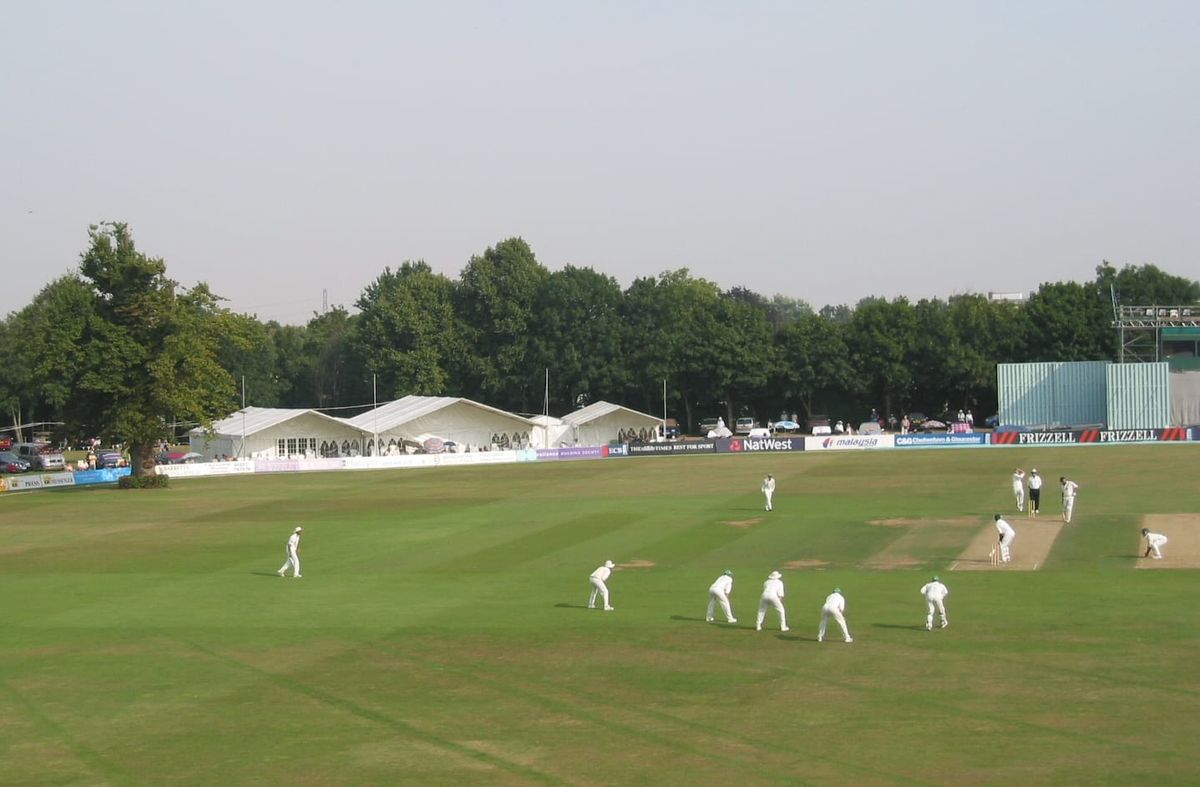
The most famous example is the legendary St Lawrence Lime Tree at the Kent County Cricket Ground in Canterbury, England. For years, this giant, 90-foot lime tree stood actively inside the boundary rope.
The ICC actually had to write special local rules for it: if a batter hit the tree, it was scored as an automatic four, and players could not be caught out from a rebound off the branches. Only four batsmen in first-class history ever cleared it for a six.
While the tree blew down in a storm in 2005 (and was replaced by a sapling), the mindset that permitted it still governs the ICC today. The official playing conditions state that boundaries must be between 65 and 90 yards (about 59 to 82 metres) from the centre of the pitch. Beyond that wide range, there are no restrictions.
Close-in Catcher’s Take
We no longer play cricket on rustic cow pastures with trees on the boundary. This is a highly professionalised, data-driven global industry where millions of dollars in tournament rights, franchise valuations, and athlete contracts ride on single deliveries.
Adapting to a pitch surface is a fair tactical challenge. Adapting to an entirely different, irregularly shaped polygon of a field is an unnecessary distraction.
If the ICC wants cricket to be respected as a truly elite global sport alongside football, it must stop granting regional exemptions. It is time to enforce a strict, standardised oval shape with uniform boundary lengths across all international venues. Until we do, results like Belfast will always be stained by the uneven turf they were played on.
Standardise your game and maximise your reach! True athletic dominance requires consistent tools and unwavering standards. Whether you are navigating an awkward local field or training for a regional championship, elite gear is what keeps your execution precise. Elevate your physical conditioning and touch today with top-rated Official Match-Spec Footballs and Pro Training Gear on Amazon India and master your own field with absolute consistency!